在音樂響起的那一刻,語言突然變得不再重要。
In the moment the music begins, language suddenly stops mattering.
這場婚禮裡,有來自不同國家的親友。有人說中文、有人說英文,也有人其實不一定聽得懂彼此的語言。
但當第一個人伸出手,邀請身旁的人一起圍成一個圓圈時,現場開始變了,只剩下一種直覺——一起參與。
因為有些情感,本來就不是靠語言成立,而是靠身體、互動漸漸貼近。
This wedding brought together guests from many countries. Some spoke Mandarin, some spoke English, and some couldn’t fully understand each other.
From the first moment the person reached out their hand and invited others to form a circle, things changed. There was no longer anything but an instinctive —everyone was participating.
Because some emotions are never built through languages, but through closeness and shared experience.
從陌生到牽手,只需要一首歌的距離
From first met to Holding Hands, just need a Song.
宴會一開始,其實還帶著一點安靜的距離感。
台灣賓客與國外賓客分坐不同桌,彼此微笑點頭,停留在禮貌與觀望之間。
直到音樂一下。
有人先站起來,慢慢圍成一個圓。
牽手、踏步、節奏開始流動,也有人笑著向外國朋友招手:「一起來!」
那不是表演設計好的橋段,而是一種很自然的邀請。
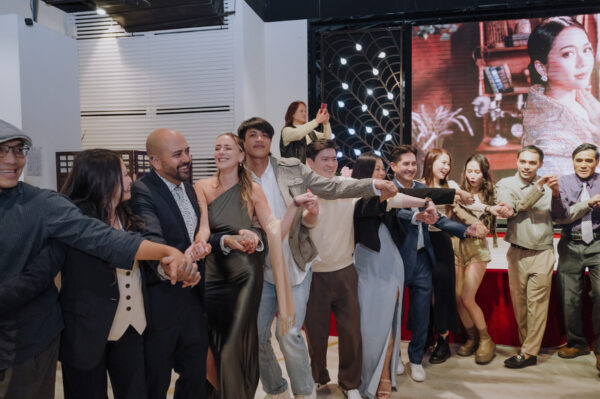
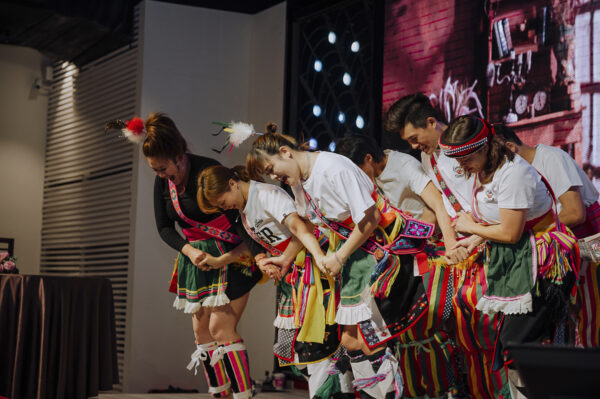
在畫面中,台灣與國外賓客一起圍成圈,跳著阿美族傳統舞蹈。
原來來自不同文化的人,可以在同一個節奏裡慢慢靠近。
沒有誰是旁觀者,因為舞蹈本身,就是一種邀請。
At the start of the banquet, there was still a quiet, subtle distance in the air.
Guests from Taiwan and overseas sat at different tables, exchanging polite smiles but remaining in their own spaces.
Until the music started playing.
Someone stood up first, and slowly, a circle began to form.
Hands were held, steps were taken, and the rhythm began to flow. Some smiled and waved at their foreign friends: “Come join us!“
It wasn’t a choreographed performance. It was a natural invitation.
In that moment, Taiwanese and international guests formed a circle together, dancing a traditional Amis dance.
It turned out that people from entirely different cultures could draw closer, one step at a time, within the same rhythm.
No one was a mere bystander, because the dance was the invitation.
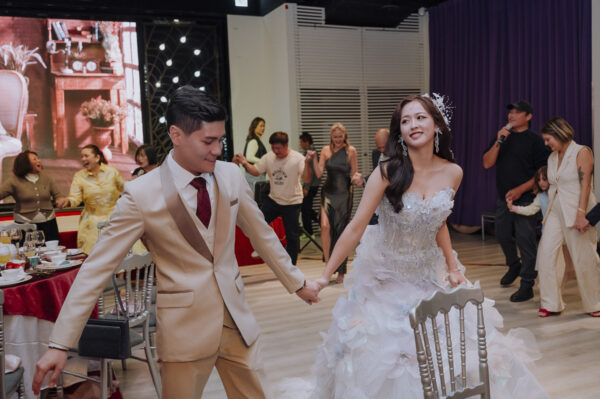
圓心裡的新人,是被祝福包圍的兩個人
The Couple at the Center, Surrounded by Blessings.
音樂節奏越來越熱烈,新郎 Timothy 與新娘 Sabrina 自然被圍在圓圈中央。
他們沒有刻意站上舞台中心,反而更像是被整個場域的溫柔包圍。
新人跟著大家一起跳、一起笑。
沒有刻意設計的高潮,但情緒非常真實。
那一刻的感覺很清楚:
👉 不是「在參加婚禮」
👉 而是「一起成為婚禮的一部分」
祝福不再只是坐在台下鼓掌,而是透過一起舞蹈、唱歌被完成。
As the rhythm grew more vibrant, the groom, Timothy, and the bride, Sabrina, were naturally drawn into the center of the circle.
They didn’t intentionally take center stage; instead, it felt as though they were gently held by the sheer warmth of the entire room.
They danced and laughed with the guests.
There were no manufactured climaxes, yet the emotions were incredibly real.
It felt like:
👉 It wasn’t about “attending a wedding.”
👉 It was about “becoming a part of the wedding together.“
Blessings were no longer just about sitting at a table and clapping; they were fulfilled through dancing and singing as one.
真正重要的,是讓每一位到場的人都能融入
What Truly Matters Is Ensuring Every Guest Feels Included
很多新人在準備跨文化婚禮時,最在意的其實不是流程。
而是:
「不同國家的家人朋友,真的能自然地玩在一起嗎?」
婚禮中,有第一次來台灣的國外賓客,也有台灣親友。
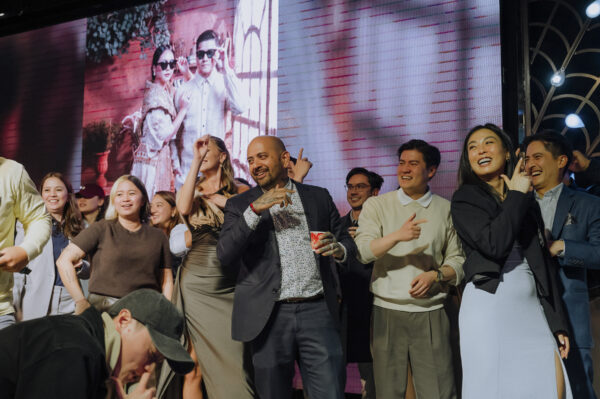
當大家牽起彼此的手、跟著音樂一起跳舞時(圖三),原本的陌生感逐漸消失了。
有人邊笑邊學舞步,有人即使聽不懂歌詞,還是很自然地融入人群裡。
因為真正讓人記住的,從來不是「有沒有完全聽懂」。
而是:
「我有沒有一起感受到這份幸福。」
當大家開始願意靠近彼此,文化之間的距離,也會慢慢靠近。
When planning a cross-cultural wedding, what many couples worry about most isn’t the itinerary.
It’s this: “Can family and friends from different countries truly mingle and have fun together naturally?”
Among the guests were international friends visiting Taiwan for the very first time, alongside Taiwanese family and friends.
The moment everyone held hands and danced to the music (Photo 3), the initial sense of unfamiliarity melted away. Some learned the steps through bursts of laughter, while others, despite not understanding a single lyric, naturally blended into the crowd.
Because what people truly remember is never whether they understood every word.
It is:
“Did I feel part of this joy?”
And when people begin opening up to one another,
the distance between them slowly fades away.
最動人的瞬間,是大家開始願意一起玩
The Most Beautiful Moment Was When Everyone Started Dancing Together
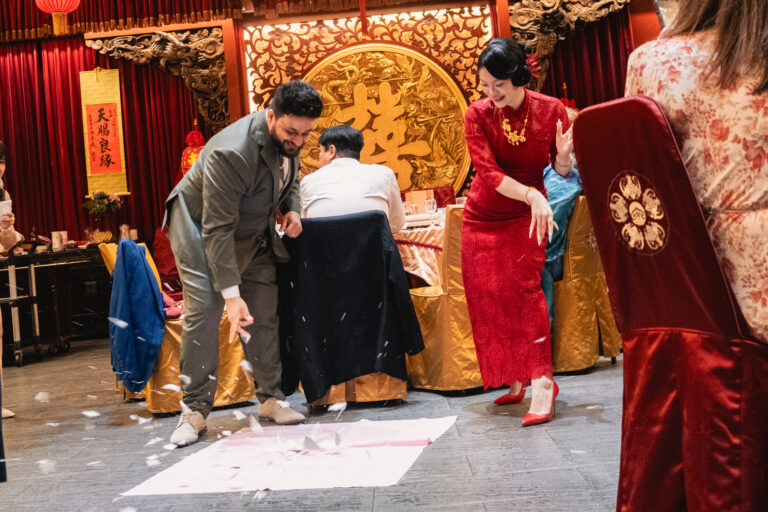
後來發生了一幕很可愛的畫面,台灣賓客主動牽著外國朋友上台(圖四)。
一開始有人害羞,有人還在摸索步伐,但沒有人在意對錯。
因為重點從來不是跳得好不好,而是——願不願意一起跳。
當音樂響起,是台灣經典的招牌舞曲〈我心已打烊〉。
台灣賓客自然地跳出屬於他們節奏感的舞步,簡單、直接,也很有生命力。
Later in the afternoon, something lovely happened. Taiwanese guests began pulling their foreign friends onto the dance floor (Photo 4).
At first, some were shy, while others were still figuring out the steps, but no one cared about getting it right.
Because the point was never about dancing well—it was simply about being willing to dance together.
When the music started, the room instantly came alive with the familiar Taiwanese party song “Wo Xin Yi Da Yang” (我心已打烊).
Taiwanese guests naturally began dancing to the rhythm in their own way—simple, playful, and full of energy.
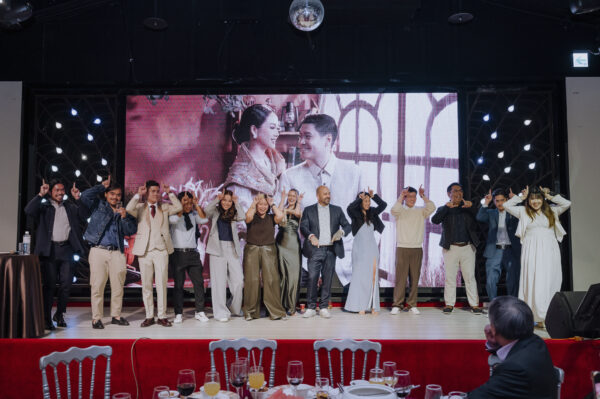
我把這段舞蹈的動作與意涵,用英文簡單帶給國外賓客理解,他們很快就跟著加入節奏(圖五)。
有人笑著跳錯拍子,有人邊跳邊笑自己,現場充滿很純粹的快樂。
語言和文化背景的隔閡還在,但這些不再是阻隔。
反而變成一種好奇與靠近——
「我想試著理解你們的世界。」
而這份主動靠近,比任何話語都更有力量。
I briefly shared the meaning behind the dance in English, and soon the international guests were joining in too (Photo 5).
Some laughed as they missed the beat, while others laughed at themselves as they danced. Before long, the whole room was filled with pure joy.
The language and cultural differences were still there, but they no longer felt like barriers.
Instead, they became something that brought people closer:
“I want to understand your world a little more.”
And sometimes, that willingness to reach toward one another says more than words ever can.
愛不是只有說出口,而是願意一起走進彼此的世界
Love Is Not Only Spoken—It Is Shared in Motion
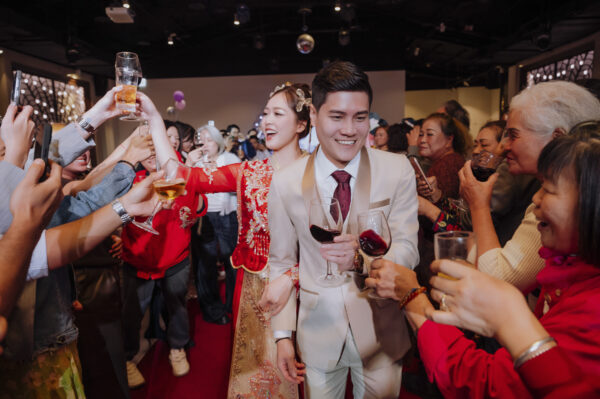
在婚禮中,大家在現場聊天、拍照,有人語言不完全相通,但已經能自然地碰杯、大笑。
謝謝 Timothy 與 Sabrina,讓這場婚禮不只是「國際婚禮」,而是一場真正讓不同文化彼此靠近的相遇。
原來當人願意走向彼此時,語言就不再是邊界。
有些祝福會透過音樂被理解,有些情感會透過舞蹈被記住,而有些愛,會在人群一起轉動的那一刻,被完整留下來。
During the wedding, guests were chatting and taking photos. Even when language wasn’t fully shared, people were already clinking glasses and laughing naturally.
Thank you, Timothy and Sabrina, for making this more than just an “international wedding.” It became a moment where different cultures naturally came closer.
It turns out that when people are willing to move toward one another, language is no longer a boundary. Some blessings are understood through music, some emotions are remembered through dance, and love is fully preserved in the moment a crowd moves together as one.